A Mother's Village
Why loneliness is so common in early motherhood, what it is not, and the kind of connection that actually shifts it.
Because the circumstances change faster than the network does. Adult conversation drops, the working day disappears, sleep is broken, and the friendships that were built around work no longer fit the hours you keep.
It is one of the most commonly reported experiences of early motherhood, and it is not a sign that you are doing it badly.
If you need help now: in an emergency call 911. For urgent mental-health support anywhere in Canada, call or text 988, the Suicide Crisis Helpline, any time. Haven is a community app, not a crisis service or a substitute for medical care.
Many mothers describe feeling lonely while never actually being alone. The missing piece is usually not people in the room — it is being known by someone who understands the week you are having.
Loneliness and postpartum depression are different things, and it matters which one you are dealing with.
If low mood has lasted more than about two weeks, or you are worried at all, speak to your doctor, midwife or public-health nurse. It is common and it is treatable — roughly one in five mothers experiences postpartum depression or anxiety.
Large parenting groups are good for information and poor for belonging. Thousands of members, no proximity, and no obligation in either direction. Haven is built the other way: small villages, verified members, close enough that help can actually arrive.
Yes. Loneliness in early motherhood is extremely common, and it is not a sign of failing at it. It usually reflects a change in circumstances — less adult contact, disrupted routines, and a network built around work rather than home.
Loneliness is a feeling about connection and usually lifts when contact improves. Postpartum depression is a medical condition that can persist regardless of company and may include hopelessness, inability to enjoy things, or trouble bonding. If low mood lasts more than two weeks, speak to a doctor, midwife or public-health nurse.
Repeated contact with the same few people nearby, rather than lots of one-off interactions. Weekly drop-ins, a regular walk with one neighbour, or a small local group tend to work better than large online communities.
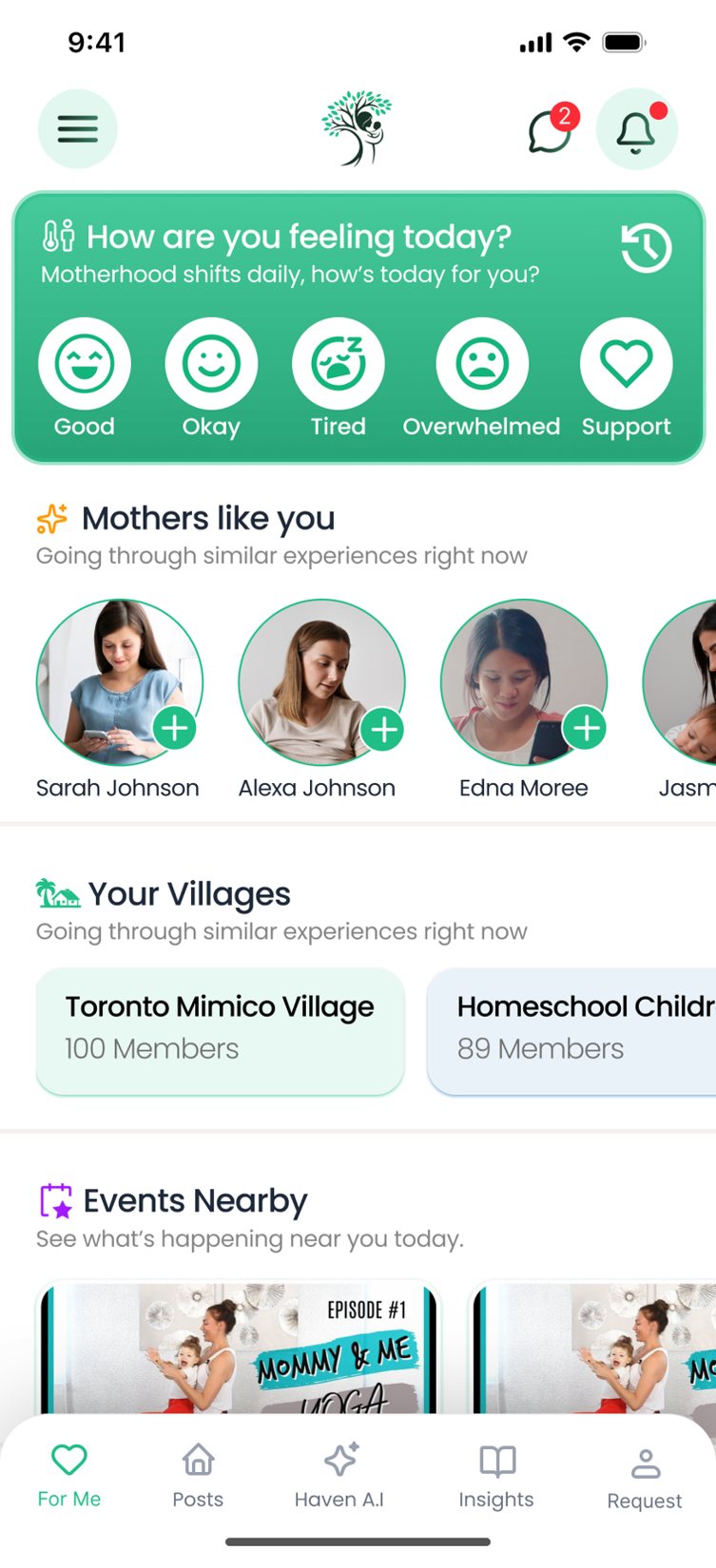
Real screens from Haven, opening in Ontario in fall 2026.
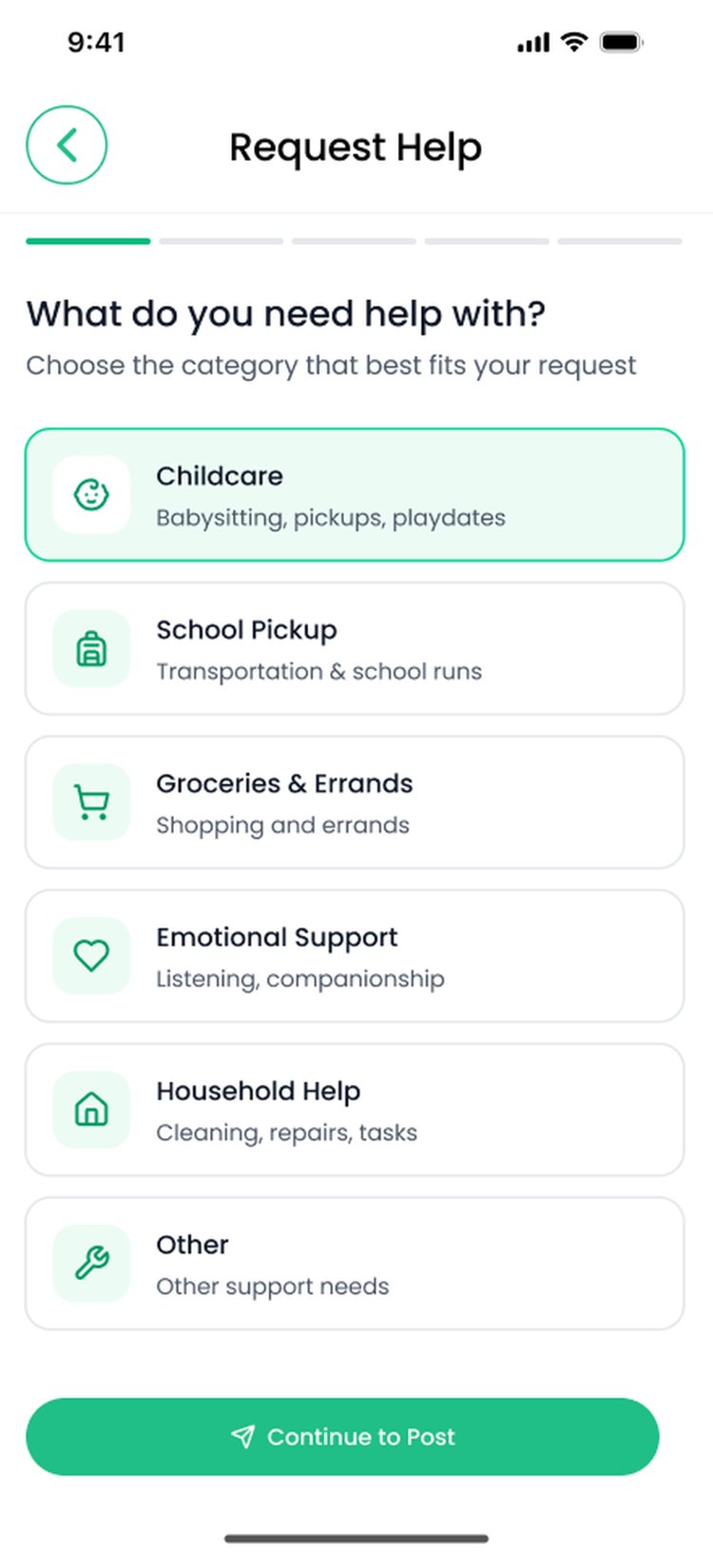
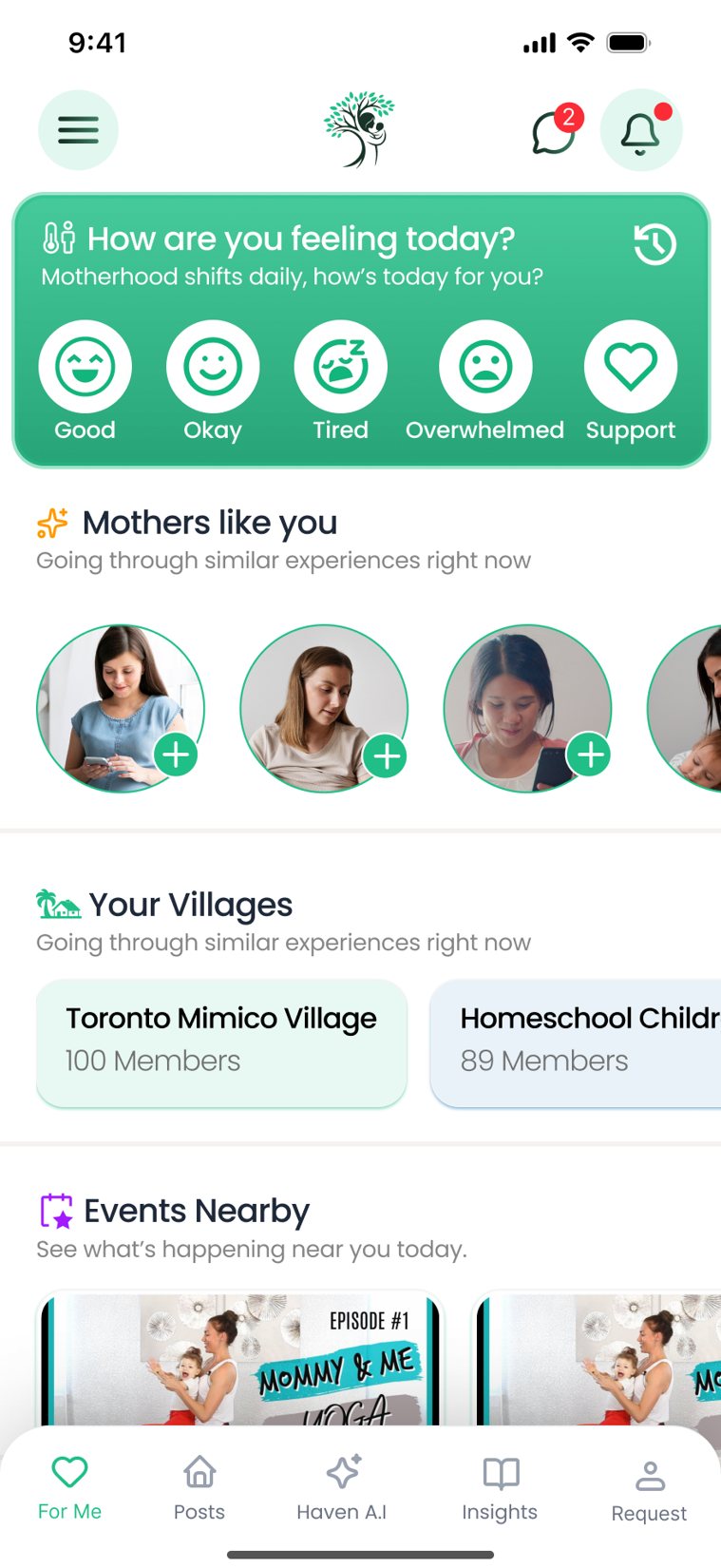
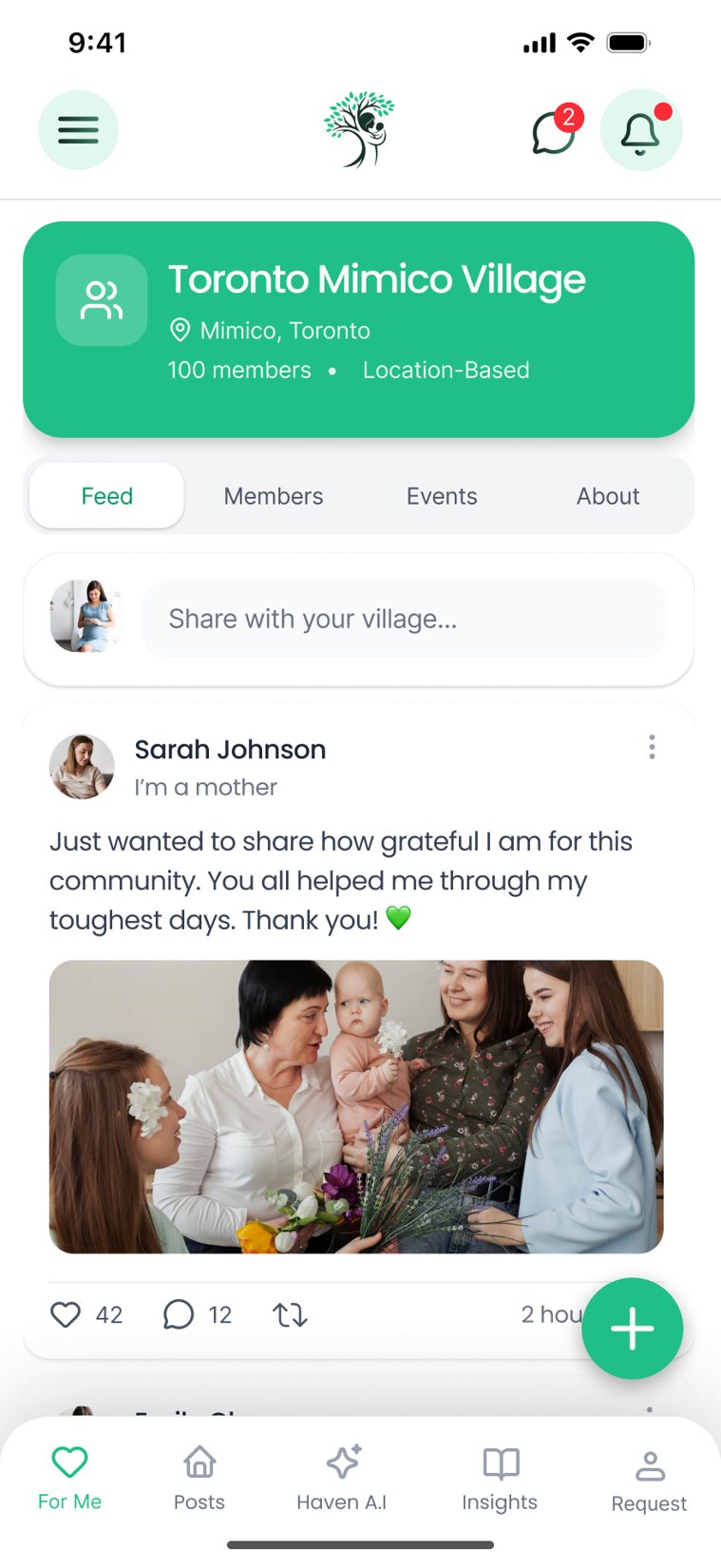
Support looks different on different days — and all of it counts.




Behind the scenes of building Haven — the community, the mothers, and the road to launch in Ontario.




Add your email and we'll write once — the day your village opens. Tell us where you are and it helps us choose the next community.
Thank you — you're on the list. We'll be in touch.